

Duncan Daines
26th Aug 2026Preparing for the Emergency Services Network (ESN)
Preparing for the Emergency Services Network (ESN)
For UK Helicopter Emergency Medical Services (HEMS) and other blue light aviation services, the Emergency Services Network (ESN) is no longer an abstract national programme. It is a live aircraft availability, certification and fleet investment issue. The Home Office plan confirms ESN “Full Voice Service Ready” by March 2028. That should not be read as permission to wait. For AW169, EC135/H135 and H145 operators, the practical work starts with understanding what is already installed, what must move, what cannot move, and what approval route is required before aircraft are taken out of service.
ESN
ESN will replace Airwave with secure, prioritised 4G/5G voice, video and data. ESN Air combines enhanced terrestrial coverage with an aircraft communications system designed for emergency service aviation. Government guidance specifies coverage from above 500 feet to 10,000 feet where operationally required. Emergency users will have priority over commercial traffic, and the mission-critical solution is intended to support push-to-talk, operational data and multimedia services.
This is a material shift for emergency services aviation. Airwave has provided dependable voice communications, but its limited data capability and ageing technology make it increasingly difficult and expensive to sustain. ESN is intended to improve real-time sharing of data, images and video, strengthen situational awareness, support faster decision-making and improve interoperability between agencies. For specialist blue light aviation services, that capability will only be realised if the aircraft integration is properly designed, certified and supported.
One network, different use cases
For HEMS operators, reliable aircraft connectivity can strengthen the information flow between dispatch, the aircraft, ground ambulance teams and receiving hospitals. The value is not simply greater bandwidth; it is the ability to move timely operational and clinical information closer to crews. Any HEMS communications upgrade must also work within a demanding cabin environment, including medical equipment, limited space, weight and balance constraints, crew ergonomics and the need to keep aircraft available for life-saving tasking.
For other blue light aviation services, ESN protects the requirement for resilient voice communications while enabling richer data exchange with command-and-control, dispatch and mission systems. The national aircraft communications framework provides for an interim TETRA capability that can transition while reusing much of the installed hardware. This makes configuration control, future-proof installation design and clear airworthiness ownership commercially important from the outset.
More than a radio replacement
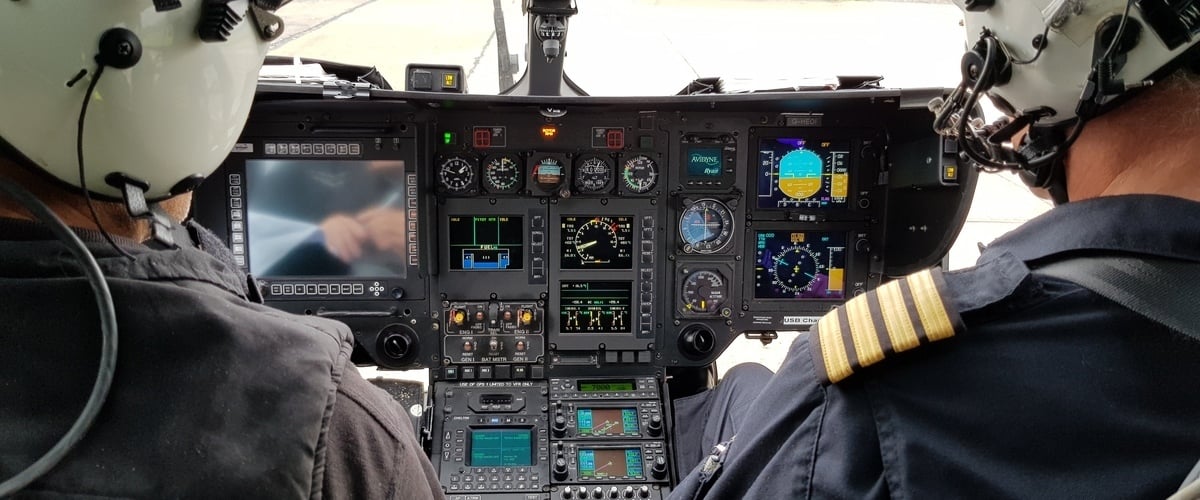
An ESN aircraft upgrade is a systems-integration and airworthiness project, not a radio swap. Operators need to understand how antennas, radio-frequency pathways, control heads, transceivers, wiring, power supplies, audio panels and mission computers interact with the approved aircraft configuration. The issues will not be identical across the AW169, EC135/H135 and H145. Each type has different available space, existing modification history, antenna real estate, mission-equipment fit, cabin architecture, maintainability constraints and certification baseline. Any ESN change therefore needs to protect the integrity of the approved aircraft configuration for that type. Antenna siting can affect structure and performance; new equipment can change electrical loads, weight and balance, maintainability and crew ergonomics. The real estate on each aircraft is finite, and poor early decisions can create avoidable interference, rework and downtime.
Certification needs to be planned from the start. The UK CAA states that all changes to approved type design require approval. Major changes normally require an appropriately approved design organisation and, where the applicant is not the type-certificate holder, may be approved through a Supplemental Type Certificate (“STC”). The certification pack may include the change definition, embodiment instructions, compliance evidence, flight-manual material and Instructions for Continued Airworthiness. Equipment approval alone is not approval to install that equipment on an aircraft.
There are also a funding and accountability point that should be understood early. Programme funding may cover hardware and contribute to installation on registered aircraft, but that does not automatically fund the major modification work needed to create the approval basis i.e. feasibility activity, structural assessment, antenna analysis, loom routing, test planning, certification engagement, conformity evidence and continued airworthiness material. If those activities are left undefined, the operator carries the risk through late procurement, extended maintenance input and reduced fleet resilience.
Should I wait?
Delayed preparation compresses decision-making into a narrowing window. It can expose operators to scarce engineering capacity, late discovery of aircraft-specific constraints, certification rework and longer out-of-service periods. Early assessment does not require every ESN detail to be fixed. It creates evidence, identifies dependencies and gives decision-makers credible options as releases mature. The Government’s transition model is staged, piloted and tested.
The operational risk is not theoretical. If transition activity is approached as a late, uncoordinated modification, an aircraft can be removed from service for longer than planned while design questions, parts availability, certification evidence, maintenance access, test availability or software issues are resolved. For small specialist fleets, the loss of even one aircraft can reduce surge capacity, place pressure on backup aircraft and crews and disrupt planned maintenance. The avoidable cost is not just workshop time; it is lost operational resilience at the point the aircraft is needed most. A properly sequenced transition protects availability by aligning survey, design approval, kit readiness, embodiment, ground test, flight test and release to service before the aircraft enters the maintenance input.
This risk is amplified where ESN embodiment collides with other known fleet events. Engine overhaul periods, interior refresh requirements, aircraft age, asset replacement decisions and the availability of backup aircraft or loan engines all compete for the same planning bandwidth.
A major STC may take many months to develop, with further effort required before submission. Waiting until the final equipment fit is available risks pushing design, certification, parts procurement, aircraft access and operational planning into the same narrow window. That is how avoidable downtime translates into a loss of mission availability.
ESN and fleet strategy
The UK-only nature of ESN should not be treated as a narrow technical concern. It has a direct bearing on fleet strategy, aircraft residual value and the timing of future replacement decisions. An ESN-ready aircraft may be well positioned for UK emergency services work, but that same modification may have limited value to an overseas buyer and could reduce marketability if the aircraft needs to be returned to a more standard configuration before sale.
That creates three practical consequences for operators and Boards. First, the cost of embodiment should be considered alongside the potential cost of future de-modification. Second, the sale window for older aircraft may be affected if several UK-configured aircraft come to market with similar ESN equipment and limited international demand for that configuration. Third, replacement planning needs to consider whether the ESN investment remains with the existing aircraft, transfers to a new aircraft, or must be repeated at additional cost.
This is why ESN should sit on the same planning table as engine overhauls, interior refresh, aircraft age, residual value and future capability requirements. A short-term decision to wait may appear prudent if the programme detail is still developing. In practice, it can remove options. By the time the final embodiment window arrives, the operator may be committed to aircraft downtime, late certification activity and a configuration that has not been tested against wider fleet plans.
The better course is to quantify the position early: what the aircraft will need, what the change is likely to cost, how long the aircraft may be unavailable, how the modification affects exit value, and whether a replacement-aircraft strategy would deliver better long-term value. That analysis turns ESN from a compliance burden into a controlled fleet decision.

The fleet strategy will also differ by type. An AW169 operator may need to consider the interaction between ESN, existing HEMS interiors, previous communications modifications, engine-overhaul timing and future asset-value decisions. An EC135/H135 operator may place greater emphasis on cabin space, weight, electrical capacity, legacy equipment, fleet age and whether the aircraft remains economic to modify when set against replacement or life-extension plans. An H145 operator may view ESN through the lens of a more current fleet platform, but still needs to test antenna siting, equipment location, downtime, commonality and the cost of making the aircraft UK-specific if future disposal is contemplated. The point is not that one aircraft type carries all the risk. The point is that each type needs its own evidence-led plan.
A partner for the upgrade
Gama Aviation can support HEMS and other blue light aviation operators from feasibility through certified embodiment and in-service support. That support applies across AW169, EC135/H135 and H145 fleets, with the practical emphasis tailored to the aircraft type, existing modification status and operator mission profile. For AW169 operators, Gama Aviation’s experience with UK HEMS interiors, approved design data, loom manufacture, Part 21J design, Part 21G production and Part 145 embodiment is particularly relevant. For EC135/H135 and H145 operators, the value lies in applying the same disciplined approach to aircraft survey, configuration control, certification planning, embodiment sequencing and release to service. The common requirement is a single accountable route through feasibility, certification, installation and in-service support.
The sensible next step is a structured feasibility exercise. That means confirming the aircraft baseline, likely antenna locations, wiring routes, structural implications, equipment locations, interoperability risks, maintenance access, certification route, engagement with the OEM and UK CAA, indicative embodiment cost and likely downtime. Run properly, this gives operators and Boards a defensible view of cost, risk, timing and asset impact before the programme reaches the point at which aircraft availability is already under pressure.
ESN will change how emergency services communicate. Effective aircraft integration will determine how reliably that capability reaches the front line. Operators should now establish the upgrade baseline, secure engineering capacity and build an operational-readiness plan with a partner that understands both the aircraft and the mission.