
Duncan Daines
24th Sep 2026Networked CUAS: Layered drone protection for critical infrastructure
Synopsis
Drones have transformed from niche technology into a mainstream capability accessible to consumers, businesses and adversaries alike. While their legitimate uses continue to expand, so too does their potential for misuse against critical national infrastructure (CNI), prisons, transportation networks and other sensitive facilities. Security leaders are increasingly recognising that drone threats can no longer be addressed through traditional perimeter security or a single counter-drone technology.
The most effective counter-unmanned aircraft system (CUAS) strategies are now built around layered, networked architectures that combine detection, identification, tracking and proportionate mitigation. Passive radio frequency (RF) detection systems such as SCOUT provide persistent airspace awareness without creating additional electromagnetic emissions, while multiple networked sensors can extend coverage well beyond the boundaries of a single site. When integrated with a command-and-control environment and targeted mitigation capabilities such as DART, operators gain the ability to identify threats early, understand intent, and respond in a controlled and proportionate manner.
This evolution is particularly significant for operators of critical infrastructure and correctional facilities, where affordability, scalability and operational continuity are paramount. Rather than protecting a single asset in isolation, networked CUAS solutions enable organisations to monitor wider areas, assess threat vectors and establish a common operating picture across entire estates or regions. As drone threats continue to evolve, layered airspace protection is rapidly becoming a core component of modern security resilience.
The next security perimeter is above us
For decades, security design has focused on controlling access to land, buildings and infrastructure. Fences, barriers, CCTV systems, access control and armed response all evolved around a common assumption: threats approach from the ground.
Drones have fundamentally changed that assumption.
Today, a commercial drone costing only a few hundred pounds can bypass conventional perimeter security, conduct reconnaissance, deliver illicit payloads, disrupt operations or create significant safety hazards. As drone technology continues to mature, the barriers to entry continue to fall while capability continues to increase.
For operators of critical national infrastructure, this represents a profound shift in risk.
Power generation sites, electricity substations, telecommunications facilities, water treatment plants, ports, airports and data centres all face exposure to low-cost airborne threats. The same challenge exists across the prison estate, where drones are increasingly used to deliver narcotics, mobile phones, weapons and other contraband directly into secure environments.The question is no longer whether drones represent a threat. The question is whether organisations possess sufficient awareness of the low-altitude airspace surrounding their operations to detect, understand and mitigate that threat before harm occurs.
Why layered protection matters
One of the greatest misconceptions in the CUAS domain is that a single piece of equipment can solve the drone problem.
It cannot.
No individual sensor technology is capable of delivering complete detection, identification, tracking and response capability across all operating environments. Radar systems excel in many situations but can face challenges in urban clutter and complex infrastructure environments. Optical sensors provide valuable identification and evidential imagery but generally require a target to be located before visual confirmation can take place. Acoustic technologies can contribute valuable information under specific conditions but are inherently influenced by environmental noise and geography. The most resilient approach therefore combines complementary technologies into a layered architecture. The objective is not simply to detect a drone. Rather, it is to build a complete operational picture that answers several critical questions:
- What has been detected?
- Where is it?
- Where did it come from?
- Who is controlling it?
- What is it likely to do next?
- What response is proportionate and legally appropriate?
A layered system creates the conditions for informed decision-making rather than reactive intervention.
Building persistent awareness through passive RF detection
Amongst the available sensing technologies, passive RF detection has emerged as one of the most operationally attractive foundations for modern CUAS architectures.
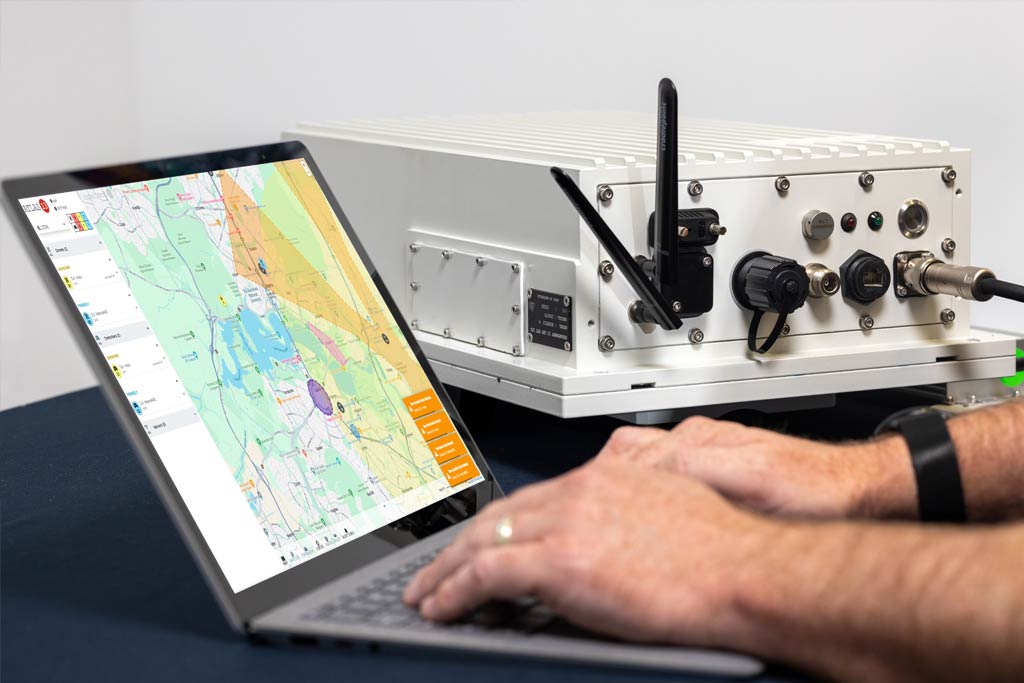
Systems such as SCOUT utilise passive RF sensing to detect and identify the signals emitted by drones and their controllers. Unlike active sensors, passive RF technologies do not transmit energy into the environment, enabling them to operate discreetly and effectively in sensitive locations. SCOUT is described as a passive RF-based capability designed to detect and track drones and controllers while integrating with the ATLAS command-and-control platform.
The advantages are significant.
Firstly, passive detection imposes no additional burden on already congested spectrum environments. Secondly, it can provide awareness before a drone enters the immediate vicinity of a protected asset. Thirdly, it can help identify not only the drone but also the operator, an increasingly important requirement for law enforcement, intelligence gathering and evidential purposes.
For infrastructure operators, understanding who is controlling the aircraft can be just as important as understanding where the aircraft is flying.
A drone incident frequently represents broader hostile activity. Identifying the operator helps security teams move beyond simple response and towards deterrence, investigation and prosecution. Moving from site defence to area defence. Perhaps the most important evolution in CUAS thinking is the transition from point defence to area defence.
Historically, organisations have sought to secure individual facilities. A sensor is installed at a specific site, providing awareness within a defined perimeter. However, drone threats rarely begin at the perimeter. Operators launch from surrounding communities, industrial estates, transport corridors and public spaces. Consequently, an organisation that only observes activity at the boundary is often detecting a threat after critical decision-making time has already been lost.
A more effective approach is to create an umbrella of awareness across a wider operational area. Networked deployments using multiple RF sensors provide precisely this capability. Documentation relating to SCOUT highlights that when multiple sensors are deployed, detections can be fused into a common operating picture and support enhanced geolocation and tracking capability across larger monitored areas. This distributed model transforms security outcomes.
Instead of protecting a single facility, operators can observe approach routes, launch locations and likely threat vectors. Multiple sites can share a common operating picture. Drone activity patterns become easier to analyse. Repeat offenders can be identified. Response resources can be prioritised more effectively.
In effect, organisations gain visibility not only of the threat itself, but of the wider environment in which that threat operates.
The affordability advantage
Security investment decisions are inevitably influenced by economics. Many organisations assume that meaningful CUAS capability demands major capital expenditure and military-grade infrastructure. In practice, networked RF architectures offer a fundamentally different commercial proposition. The strength of a distributed sensing model lies in scalability. Rather than deploying expensive standalone systems at every location, organisations can build sensor networks that protect multiple assets simultaneously. Coverage can be expanded incrementally to align with risk, operational requirements and budget availability.
This is particularly relevant for critical infrastructure operators that manage geographically dispersed assets.
An electricity distribution network, for example, may contain dozens of vital substations spread across a region. A prison service may operate multiple facilities within a single area. Petroleum pipelines, telecommunications infrastructure and transportation networks present similar challenges. By adopting an area-monitoring model, operators can shift from protecting individual locations to protecting entire operational ecosystems. This not only improves situational awareness but also drives significantly greater value from every sensor deployed.
The importance of precision mitigation
Detection, however, is only one part of the equation.
Once a hostile drone has been identified, organisations require lawful, safe and proportionate means of intervention.
Traditional approaches have often centred around broad-spectrum RF jamming. While effective in some operational contexts, these techniques can create challenges where legitimate communications, safety-critical systems and friendly drone operations must continue uninterrupted. This is where targeted mitigation capabilities become particularly relevant.
DART is described as a radio-frequency-based detect and mitigate capability that provides non-kinetic, non-jamming intervention through protocol-based disruption techniques. Available mitigations can include options such as landing, hovering or returning to a designated location.
For critical infrastructure and prison operators, this distinction matters greatly.
The objective should never simply be to neutralise a drone. The objective is to remove the threat and retrieve evidence while preserving the integrity of the surrounding operating environment.
Precision mitigation supports that outcome by reducing unintended consequences and enabling more proportionate operational responses.
A new model for airspace security
The future of CUAS will not be defined by individual sensors or standalone technologies. It will be defined by how effectively organisations integrate awareness, intelligence and response into a coherent operational capability.
For critical national infrastructure and correctional environments alike, the emerging model is clear: persistent detection through passive sensing, expanded awareness through networked architectures, informed decision-making through integrated command and control, and proportionate intervention through targeted mitigation.
In many ways, this represents the natural evolution of physical security.
Just as CCTV networks transformed the protection of physical estates, networked CUAS architectures are now transforming the protection of low-altitude airspace. The organisations that embrace this shift will not simply be better equipped to respond to drone incidents. They will be better positioned to understand, anticipate and deter them. In an era where threats increasingly arrive through the air rather than across the ground, that level of awareness may prove to be the most important layer of protection of all.